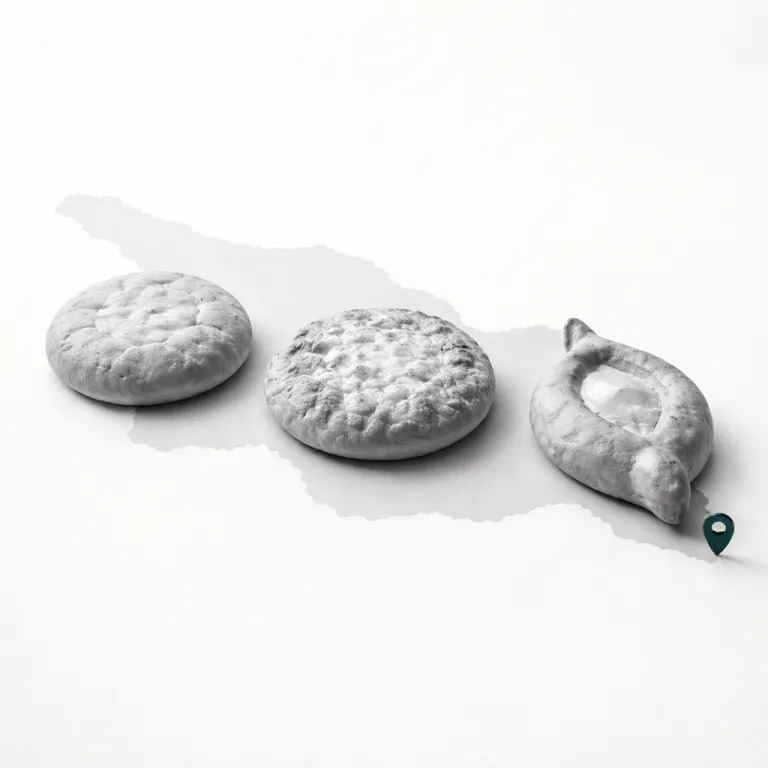
Khachapuri regional variants in Georgia as a family travel map
Think of khachapuri regional variants in Georgia as an edible atlas. This national dish of cheese-filled bread is not just comfort food; it is a way to read each region, from the Black Sea coast to the central hills and the volcanic plateaus. For premium families planning a multi-stop itinerary across Georgia, understanding how each khachapuri is stuffed, baked in the oven, and served at the table will quietly upgrade every hotel stay.
Khachapuri in Georgia is formally defined as a traditional Georgian cheese-filled bread, and the official answer to “What is khachapuri?” is simple; “A traditional Georgian cheese-filled bread.” Yet once you start tasting khachapuri Georgian versions in different regions, you realise that shape, dough, and Georgian cheese change with the landscape and the local herds. Culinary researchers now count around forty seven types of this dish, a figure often cited by Georgian food writers and TasteAtlas (accessed January 2024), and that number alone tells you how seriously the country takes its bread and cheese.
For travelers, the key is to treat khachapuri Georgia not as a single plate but as a sequence of regional experiences that you can find across a well-planned route. In Imereti, Samegrelo, Adjara, and Samtskhe Javakheti, each region has its own way of keeping the dough soft, the cheese bread crust blistered, and the centre generously filled. When you book a luxury hotel in Tbilisi or by the Black Sea, asking how the kitchen handles khachapuri stuffed breads is a sharper test of authenticity than any design detail in the lobby.
Imeretian khachapuri: central Georgia on a family table
Imeruli khachapuri, often called Imeretian khachapuri, is the quiet classic that most Georgian families actually eat at home. This round, single-layer cheese bread comes from the green hills of Imereti, a region in central Georgia known for orchards, monasteries, and soft Imeruli cheese. When a hotel restaurant in Tbilisi serves a well-balanced Imeruli khachapuri, you are tasting the country’s everyday comfort food rather than a staged showpiece.
The dough here is usually softer and slightly thicker than in coastal versions, with the cheese filled evenly so every slice feels generous but not heavy. Good kitchens brush a whisper of butter on the crust as it comes out of the oven, which keeps the bread supple enough for children to tear without effort. For a premium family, this is often the best entry point into Georgian food, because the flavours are mild, the texture is familiar, and one medium-sized bread can easily be shared between two adults and two younger children.
In luxury hotels across Georgia, Imeretian khachapuri is also the version that most clearly signals whether Georgian cooks are actually in charge of the dough. If the bread arrives pale, under-filled, or oddly uniform, you are probably looking at a generic cheese bread rather than true khachapuri Georgian craft. Ask the concierge where staff themselves go for Imeruli cheese breads on their day off; in Tbilisi, that might mean a short taxi ride to a neighbourhood restaurant such as a family-run bakery near Marjanishvili, or a simple café in Vake where cooks still stretch the dough by hand and use fresh Imeruli cheese from the morning market.
Megrelian and Adjarian khachapuri: coastlines, Black Sea light, and hotel traps
Move west toward Samegrelo and the Black Sea, and the map of khachapuri regional variants in Georgia becomes richer and louder. Megrelian cooks take the Imeretian template and crown it with extra Georgian cheese on top, creating a cheese-filled and cheese-topped bread that feels almost decadent. In Samegrelo, where rainfall is high and dairy is abundant, this style of khachapuri stuffed with sulguni is a point of regional pride.
Families staying in coastal resorts near the Black Sea will often see Megrelian khachapuri on menus alongside Adjaruli khachapuri, sometimes written as Adjarian khachapuri. The latter comes from Adjara, a region where the mountains fall into the sea, and its boat-shaped form is now the global poster child for khachapuri Georgia. In this version, the dough is formed into a shallow boat, baked in a very hot oven, then filled with molten Georgian cheese, a raw egg, and a generous spoon of butter that you swirl together at the table.
Hotel breakfast buffets from Batumi to Tbilisi love this boat-shaped Adjaruli because it photographs well and reads as the best signature dish for international guests. Yet for families, one whole bread Adjaruli per person is a trap; the combination of cheese, egg, and butter is intensely rich, and it can make a morning hike or city walk feel harder than it should. Share one Adjaruli khachapuri between three or four people, pair it with a simple bean soup or salad instead of more heavy food, and keep Megrelian cheese bread for an early dinner when the Black Sea light softens and appetites return.
From Tbilisi hotel tables to Samtskhe Javakheti: where to eat each style
In Tbilisi, the most reliable way to navigate khachapuri regional variants in Georgia is to separate hotel dining from targeted restaurant visits. Many luxury properties excel at wine lists and international menus, yet only a few handle the national dish with the same care as a neighbourhood bakery. The dataset advice still holds true here; “Try khachapuri in each region.” and “Visit local bakeries for authentic taste.” and “Pair with Georgian wine.”
Use your hotel as a base, then ask for a reservation at a specialist restaurant where the oven is visible and the dough is rolled to order. In the capital, look for places that list Imeretian khachapuri, Megrelian versions, and Adjarian khachapuri separately, rather than a single generic cheese bread; that menu detail usually signals respect for regional identity. When you travel south to Samtskhe Javakheti, a high plateau region known for volcanic landscapes and hearty Georgian food, you may find more robust breads, sometimes with bean fillings alongside the classic cheese-filled styles.
For premium families, the rule of thumb is simple and works across the country. At lunch, order one medium khachapuri for every two people, plus a bean stew or vegetable dishes, and avoid following it with another heavy stuffed bread in the same meal. In the evening, especially after a long drive between regions, let the children share a smaller cheese bread while adults explore lighter plates and a glass of wine; this keeps everyone comfortable and leaves space to try different khachapuri stuffed styles over several days rather than in a single sitting.
Reading hotel kitchens through khachapuri: practical cues for premium families
Khachapuri regional variants in Georgia are not only a culinary map; they are also a quiet audit tool for hotel kitchens. When you sit down in a luxury property in Tbilisi or by the Black Sea, notice how the staff talk about the national dish and which versions they recommend for children. A confident team will explain the difference between Imeruli khachapuri, Megrelian cheese bread, and Adjaruli khachapuri without hesitation, and they will suggest sharing portions rather than pushing oversized plates.
Pay attention to the dough first, because that is where shortcuts show. Proper khachapuri Georgian style should have a gently elastic crumb, a lightly blistered crust from a well-heated oven, and a balance between bread and filling that keeps the dish in the realm of comfort food rather than excess. If the cheese bread arrives greasy, with butter pooling on the plate, or if the cheese has an anonymous flavour rather than the tang of real Georgian cheese, you are probably eating a tourist version that tells you little about the region.
Families booking through a curated platform such as our guide to a luxury and premium hotel booking website in Georgia, especially the piece on elevating travel with refined interior design concepts, can cross-check culinary notes with design expectations. As one Tbilisi baker put it during a Slow Food workshop in 2022, “If a hotel respects the dough, it usually respects everything else.” A property that invests in local ceramics, regional wines, and staff training around Georgian food usually treats khachapuri with the same respect as its interiors. When you find a hotel where the breakfast room offers a modest, well-executed Imeruli alongside a single, perfectly timed boat-shaped Adjarian khachapuri on request, you have likely found one of the best family-friendly kitchens in the country.
Khachapuri beyond cheese: variety, khachapuri day, and planning your route
While cheese-filled breads dominate the conversation, khachapuri regional variants in Georgia also include versions that play with beans, herbs, and layered doughs. In some regions, especially where beans are a staple crop, you will encounter breads that are partly or fully bean-stuffed, offering a welcome alternative for families who want a break from dairy. These variations still belong to the same national dish family, but they show how local agriculture shapes what ends up on the table.
Food writers often mention that there are forty seven recorded varieties of khachapuri across the country, a figure drawn from sources such as TasteAtlas (updated 2023) and the Georgian National Tourism Administration (GNTA report, 2022) that track regional dishes. This number matters for travelers because it underlines how hard it would be to find every style in a single city, even in Tbilisi with its dense restaurant scene. Instead of chasing all types, plan your route so that each region you visit offers one or two emblematic breads, and treat any extra cheese bread or layered dough specialty as a bonus rather than a checklist item.
Khachapuri Day, celebrated informally by locals and food media, has helped push this humble dish into international festivals and fusion menus, yet the most meaningful experiences still happen in small dining rooms and family-run bakeries. For premium families, the goal is not to sample every possible khachapuri stuffed or boat-shaped variation, but to let a few well-chosen breads anchor your sense of place. When you leave Georgia with memories of a quiet Imeruli breakfast in Imereti, a shared Adjaruli at sunset on the Black Sea, and a hearty plate in Samtskhe Javakheti after a day of hiking, you will have read the country correctly through its bread.
FAQ: khachapuri regional variants and family travel in Georgia
What is khachapuri and why is it important in Georgia?
Khachapuri is a traditional Georgian cheese-filled bread that many locals regard as a national dish. It matters because each region has its own version, reflecting local dairy, climate, and family traditions. Tasting different styles as you travel helps you understand how varied Georgian food can be across a relatively small country.
How do regional khachapuri differ from each other?
Regional khachapuri differ in shape, dough thickness, and fillings, as well as in how they are baked. Some, like Imeretian khachapuri, are round and evenly filled, while Adjarian khachapuri is boat-shaped with an egg and butter added at the end. Others, such as Megrelian versions, add extra cheese on top, turning the bread into a richer, more layered dish.
Where should travelers try authentic khachapuri?
The most authentic khachapuri is usually found in the regions where each style was created, such as Imereti, Adjara, and Samegrelo. In Tbilisi, look for restaurants that list several regional versions separately and bake breads to order in a visible oven. Luxury hotels can be a good starting point, but asking staff for their own favourite bakery or neighbourhood restaurant often leads to better, more local experiences.
Is Adjarian khachapuri suitable for children?
Adjarian khachapuri can be very appealing to children because of its boat-shaped form and the ritual of mixing egg, butter, and cheese at the table. However, it is extremely rich, so it is better shared between several people rather than ordered individually for each child. For younger travelers or lighter appetites, Imeretian khachapuri is usually a gentler, more manageable option.
How many khachapuri should a family order per meal?
A practical rule for families is to order one medium-sized khachapuri for every two people, then add salads, bean dishes, or grilled vegetables around it. This keeps the meal balanced and leaves room to try desserts or other Georgian food specialties. Ordering too many cheese breads in one sitting can make sightseeing or hiking later in the day feel unnecessarily heavy.
References
TasteAtlas (accessed January 2024); Georgian National Tourism Administration, regional gastronomy report (2022); Slow Food Foundation for Biodiversity, workshop notes from Tbilisi (2022).