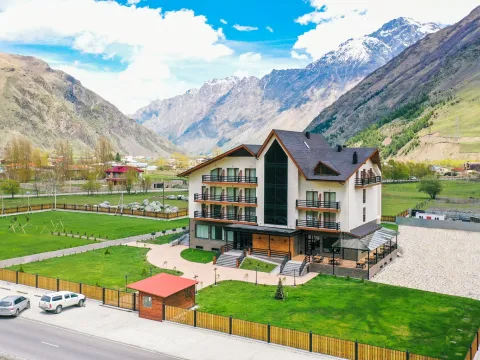
Discover where to stay in Georgia’s Mtskheta–Mtianeti region, from riverside Mtskheta hotels to Gudauri ski lodges and Kazbegi mountain retreats, with clear guidance on facilities and traveler profiles.
Why the Mtskheta–Mtianeti region is worth planning your trip around
Stone churches on hilltops, a river bend below, and the Caucasus already visible on the horizon – the Mtskheta–Mtianeti region is where many trips to Georgia quietly begin. It sits just north of Tbilisi, yet feels like a different tempo entirely. For travelers choosing a hotel here, the question is not whether to come, but how long to stay and which landscape to wake up to each night.
Stay in and around Mtskheta itself if you want history at your doorstep. The old capital lies at the confluence of the Mtkvari and Aragvi rivers, with compact streets such as Kostava Street and Arsukidze Street lined with small, characterful hotels and guest houses. You step out of your hotel and within minutes you are at Svetitskhoveli Cathedral, hearing bells rather than traffic. It suits travelers who prefer to enjoy evenings in wine bars and family-run restaurants rather than in large resort facilities.
Head further north into Mtianeti if the mountains are your priority. The road that eventually reaches Gudauri and Kazbegi (Stepantsminda) follows the Georgian Military Highway, climbing quickly into alpine scenery. Here, hotels shift from riverside retreats to ski lodges, spa properties and cottages with panoramic views. This part of the region is best for travelers who want to combine ski days, spa services and long drives through dramatic passes, rather than purely cultural sightseeing.
Staying in and around Mtskheta: rivers, monasteries, and quiet evenings
Rooms overlooking the Aragvi River define the more atmospheric stays in Mtskheta. Some hotels are tucked along Mikheila Mamulashvili Street, where balconies catch the late afternoon light and the sound of the water below. You are close enough to walk to Jvari Monastery’s trailhead by taxi in under 15 minutes, yet far from the dense traffic of central Tbilisi. For many, this balance – heritage by day, calm river views by night – is the main reason to choose hotels in Mtskheta over the capital.
Expect compact properties rather than sprawling resorts. Many hotels here offer a small number of rooms, simple but thoughtful facilities, and a focus on Georgian hospitality rather than elaborate design statements. You will typically find on-site parking, which matters if you are driving the region or planning to continue towards Gudauri ski areas or Kazbegi the next morning. Hotels with parking in Mtskheta are particularly convenient for self-drive itineraries that loop back to Tbilisi.
For travelers comparing options, Mtskheta works best as a base for one or two nights at the start or end of a trip. It is ideal if you want to enjoy slow walks around the old town, early visits to the cathedral before day-trippers arrive, and dinners that stretch into long toasts. If you are seeking extensive spa facilities, a large pool or a wide choice of room categories and apartments, you will find more developed infrastructure in the mountain resorts further north.
Gudauri: ski hotels, spa stays, and high-altitude cottages
Sharp turns, rising altitude, and suddenly the slopes of Gudauri open up on both sides of the road. This is the main ski resort of the Mtskheta–Mtianeti region and the natural choice if your trip revolves around winter sports. Hotels in Gudauri cluster around the lifts and along the main road, with direct access to the ski area often being the decisive factor when choosing where to stay.
For travelers focused on Gudauri ski days, look for properties that combine ski-in/ski-out convenience with solid mountain facilities. That usually means a heated ski room, a generous breakfast, and a spa area to decompress after a day on the pistes. Many of the better hotels here offer a mix of classic rooms and serviced apartments, which work well for families or groups who want more space and the option to cook. A cottage in Gudauri can be a strong choice if you value privacy and a living-room atmosphere, but you will want to verify access to the slopes and snow-clearing in deep winter.
Wellness is a growing focus. Several hotels in Gudauri now feature compact but well-designed spa zones with saunas, steam rooms and sometimes a small indoor pool. These hotels with spa services are not about flashy design; they are about warmth, hot stone benches and the simple pleasure of stepping from cold mountain air into a quiet, heated space. If you are comparing Gudauri with Kazbegi, Gudauri wins for ski infrastructure and immediate slope access, while Kazbegi tends to offer more dramatic, wide-open mountain views.
Kazbegi and the high valleys: views, hikes, and slower nights
Further along the Georgian Military Highway, the landscape opens into the wide basin of Kazbegi, framed by Mount Kazbek itself. Hotels here lean towards view-driven stays rather than pure ski convenience. You come to Kazbegi to watch the light change on the mountains, to hike in summer, and to enjoy long, unhurried evenings rather than to chase first lifts every morning.
Many properties in this part of Mtianeti are set slightly above the main road, with terraces or large windows facing the valley. Facilities vary widely. Some hotels offer full spa services and a pool, creating a resort-like feel where you can spend entire days on site between short walks into town. Others are simpler lodges that trade extensive facilities for a more intimate, almost homestay atmosphere. When choosing, decide whether you want to spend most of your time outdoors or whether the hotel itself is part of the experience.
Kazbegi suits travelers who value scenery and quiet over nightlife. Nights are dark, stars are visible, and the main sound is the wind in the valley. If you are torn between Gudauri and Kazbegi, think of it this way: Gudauri is better for a structured ski holiday with defined runs and après-ski in hotel bars, while Kazbegi excels at contemplative stays, long hikes, and mornings spent watching clouds drift around Gergeti Trinity Church.
Facilities and services: what to check before you book
Room size, view, and access are the three details that most shape your stay in the Mtskheta–Mtianeti region. In Mtskheta, ask yourself whether you prefer a room facing the river or the old town streets; the former is quieter at night, the latter more atmospheric in the early evening. In Gudauri and Kazbegi, altitude and orientation matter – south-facing rooms can feel warmer and brighter, especially in winter.
Facilities vary significantly between properties. Some hotels in the region offer full spa areas with saunas, treatment rooms and a proper indoor pool, while others limit themselves to a simple steam room or hot tub. If spa time is a priority, verify not only that spa services exist, but also their scale and opening hours. The same applies to parking. Hotels with parking on-site are essential if you are driving the often-snowy roads to Gudauri or continuing beyond Kazbegi towards the Russian border.
Travelers who enjoy more independence may prefer hotels that offer apartments or cottage-style units, especially in Gudauri where self-catering works well for ski weeks. These give you more space to store gear, prepare simple meals and enjoy evenings in. Traditional hotel rooms, by contrast, suit shorter stays in Mtskheta or Kazbegi where you will likely dine out and spend more time exploring. Rather than chasing the idea of the “best” hotel, focus on the specific services – spa, ski access, pool, parking, room configuration – that match how you actually travel.
How long to stay and how to combine areas
One night in Mtskheta is technically enough to see the main sights. It is not enough to feel the town. A more comfortable rhythm is two nights at the start or end of your trip, using the full day in between to visit Jvari Monastery, wander the streets around Arsukidze Street, and perhaps make a short detour along the Aragvi valley. This gives you time to enjoy both the town’s religious heritage and its quieter, residential corners.
For a winter itinerary, a common pattern is to pair Mtskheta with Gudauri. Spend one or two nights in Mtskheta to adjust, then move up to Gudauri for four to six nights focused on ski days and spa evenings. If you are traveling outside the ski season, consider replacing some Gudauri nights with Kazbegi, where hiking and long-view terraces come into their own from late spring to early autumn. The drive between Gudauri and Kazbegi is short, so you can comfortably split your time between the two.
Travelers with a full week or more can layer the experiences. Think two nights in Mtskheta, three or four in Gudauri for ski or mountain activities, and two in Kazbegi for a slower finale. This structure works well if you are flying in and out of Tbilisi, as the region lies directly on the route north. The key trade-off is simple: more nights in Gudauri mean more structured activities and facilities; more nights in Kazbegi mean more open time and views.
Who the Mtskheta–Mtianeti region suits best
Cultural travelers who want depth without constant hotel changes will find Mtskheta a strong base. You can stay in a single hotel for two or three nights, enjoy day trips to nearby monasteries, and still be within easy reach of Tbilisi’s urban energy. The town’s scale and rhythm suit couples, solo travelers and small groups who value atmosphere over extensive resort facilities.
Active travelers and families gravitate naturally towards Gudauri and the higher parts of Mtianeti. Here, hotels with ski access, spa services and family-sized apartments make logistics easier, especially in winter. A cottage in Gudauri or a multi-room apartment can be particularly appealing if you are traveling with children or friends and want shared living spaces. The trade-off is that you will spend more time within the hotel complex, especially in bad weather, so choosing the right facilities matters.
Those seeking quiet, space and mountain light will feel most at home in Kazbegi and the surrounding valleys. Nights are calm, the focus is on views rather than entertainment, and the best stays here are about simple pleasures – a terrace, a good armchair by a window, a clear line of sight to the peaks. If your idea of luxury is time and landscape rather than a long list of services, this is where the Mtskheta–Mtianeti region truly comes into its own.
Is the Mtskheta–Mtianeti region a good place to book a hotel?
Yes, the Mtskheta–Mtianeti region is an excellent place to book a hotel if you want to combine Georgia’s historic heart with easy access to the Caucasus mountains. Mtskheta offers riverside and old-town stays close to major religious sites, while Gudauri and Kazbegi provide mountain hotels with ski access, spa facilities and wide-open views. The region suits travelers who value a mix of culture, landscape and relatively short driving distances over pure city nightlife.
FAQ: hotels in the Mtskheta–Mtianeti region
How many hotels are there in Mtskheta?
Mtskheta offers a surprisingly wide choice for its size, with several dozen hotels and guest houses operating in and around the town. This range allows travelers to choose between simple, family-run stays on streets like Kostava Street and slightly larger properties closer to the river, depending on the level of comfort and facilities they prefer.
Are there spa hotels in the Mtskheta–Mtianeti region?
Yes, there are hotels with spa facilities in the region, particularly in the mountain areas such as Gudauri and around Kazbegi. These properties often include saunas, treatment rooms and sometimes an indoor pool, making them attractive for travelers who want to combine outdoor activities with wellness-focused evenings.
Is Gudauri better than Kazbegi for a winter stay?
Gudauri is generally better for a winter stay if your priority is skiing, as it functions as the main ski resort with hotels close to the lifts and ski infrastructure. Kazbegi, by contrast, is more about views and atmosphere; it can be beautiful in winter but is less focused on structured ski activities and more suited to quiet stays and short walks.
Can I use Mtskheta as a base to explore the wider region?
Mtskheta works well as a base for exploring nearby cultural and religious sites, and for short drives along the Aragvi valley, but it is less practical as a base for daily trips to Gudauri or Kazbegi due to the driving time and mountain roads. A more comfortable approach is to spend one or two nights in Mtskheta, then move on to separate hotels in Gudauri or Kazbegi for the mountain part of your trip.
What should I check before booking a hotel in this region?
Before booking, check the hotel’s exact location, access to main roads, availability of on-site parking, and the scale of its facilities such as spa areas, pool and ski services. In mountain areas, confirm how close the property is to ski lifts or main hiking routes, while in Mtskheta you may want to prioritize proximity to the old town and river views for a more atmospheric stay.