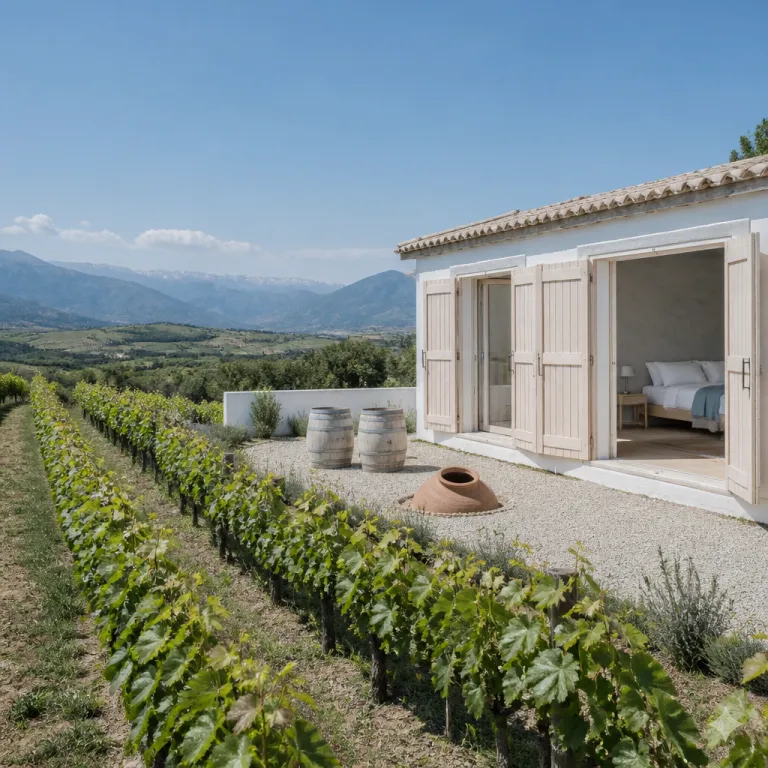
Why kakheti wine hotels in Georgia feel different from Napa or Tuscany
Staying in Kakheti wine hotels in Georgia often means sleeping above the marani, not just driving past vineyards after dinner. The Kakheti region treats the wine cellar as a family living room, so guests move between rooms, terraces and qvevri spaces as naturally as relatives coming home. In this part of Georgia, a hotel on a working estate is a place where the line between host and guest blurs fast.
Local winemakers talk about “Hospitality in Kakheti” as a duty, not a product, and that shapes how hotels in the region operate. Many properties began as a simple guest house beside the vines, then added more rooms, a restaurant and sometimes a swimming pool once repeat guests kept asking to extend their stay. You still feel that domestic scale at Kardanakhi Estate, Milorava’s Guest House & Wine Cellar or at the playful Hotel Qvevrebi, even as they refine their accommodations for a more demanding international audience.
The numbers back up what you feel at the table when the first toast is raised. Reporting cited by National Geographic notes that Kakheti is home to hundreds of qvevri wineries, producing tens of millions of liters of wine each year, and many of these wineries now keep guest rooms unlocked for visitors. According to Georgia’s National Wine Agency, the country produced over 200 million liters of wine in 2023, with Kakheti accounting for the majority of that volume, and a significant share made in traditional clay vessels. “What is Qvevri winemaking?” one local guide likes to ask before answering his own question with the official line: “A traditional Georgian method using clay vessels buried underground for fermentation.”
For travelers used to polished Napa resorts or Tuscan spa hotels, the best vineyard stays here can feel disarmingly personal. You might check availability by messaging the winemaker’s daughter on social media rather than through a global booking engine. Yet when you arrive, the property often delivers a beautiful balance of character, comfort and direct access to the vineyard life that brought you to Georgia in the first place.
Telavi: the practical base where vineyard life meets small-town rhythm
Telavi sits roughly in the center of the Alazani Valley, which makes it the most practical base for exploring multiple Kakheti wine hotels in Georgia in a single trip. The town is large enough to offer pharmacies, wine bars and a choice of restaurant options, yet small enough that you can walk from a hotel in the old streets to the morning market in minutes. Many travelers book a hotel Telavi stay for three nights, then fan out to nearby villages for tastings and cellar dinners.
Several of the best hotels around Telavi are technically outside the town limits, but still described as located Telavi in booking engines. Milorava’s Guest House & Wine Cellar, for example, feels more like a countryside inn than a formal resort, with a compact wine cellar under the house and a garden where guests linger over long breakfasts. Kardanakhi Estate, another characterful property in the wider Kakheti region, pairs 19th century architecture with qvevri wine and a relaxed approach to service that suits couples who prefer authenticity over formality.
When you check availability for hotels in and around Telavi, pay attention to how many rooms each property actually offers. A small guest house with five rooms will book out quickly during harvest, while a larger hotel with a seasonal outdoor pool and more parking can absorb last minute demand. If you plan to pair Telavi with a few nights in Tbilisi before or after, read the guide to pre summer Tbilisi and its best performance window to time your city stay around the valley heat.
Luxury here is less about a marble lobby and more about proximity to the vines and the people who work them. A Hotel Qvevrebi stay, with its qvevri shaped cottages and vineyard views, offers direct access to the landscape that makes Kakheti famous. You wake up, step outside, and the first thing you see is the Alazani Valley light sliding across the rows of vines that produced last night’s amber wine.
Sighnaghi and Tsinandali: romance, history and the art of the long view
If Telavi is the practical hub, Sighnaghi is the beautiful balcony of Kakheti wine hotels in Georgia. The hilltop town looks straight across the Alazani Valley to the Caucasus, which makes even a modest guest house feel cinematic at sunrise. Couples often choose hotels in Sighnaghi for the view first, then realize how quickly they can reach wineries, monasteries and small family cellars from this compact base.
Many Sighnaghi hotels sit in restored townhouses, where rooms open onto wooden balconies and the restaurant might occupy a former wine cellar. You will not find a lake resort scale property here, but you will find intimate accommodations where guests share terraces, compare tasting notes and sometimes head out together for a supra dinner in a nearby village. The best hotels in Sighnaghi understand that their role is to frame the panorama, then step back and let the valley perform.
Tsinandali, by contrast, is about heritage and the estate lifestyle that once defined aristocratic Georgia. The Tsinandali Estate complex anchors this area, with manicured gardens, a historic wine cellar and a cluster of hotels that treat outdoor swimming pools and shaded courtyards as essential amenities. When you check availability around Tsinandali, look closely at whether the property offers direct access to the estate grounds or simply markets itself as being near Tsinandali Estate, because that proximity shapes your daily rhythm.
This is also where the story of Georgian wine intersects most clearly with global attention. As recent coverage in the article on Georgia’s record breaking wine harvest explains, international demand is pushing more wineries to add rooms and refine their hospitality. In both Sighnaghi and Tsinandali, that means more choice for guests who want to sleep within walking distance of a working marani, not just drive in for a tasting and leave before the real toasts begin.
Staying inside the marani: from babaneuris marani to Hotel Qvevrebi and Lost Ridge
The purest expression of Kakheti wine hotels in Georgia is the stay where you sleep a staircase away from the qvevri. Properties such as Babaneuris Marani, Milorava’s Guest House & Wine Cellar and Hotel Qvevrebi build their identity around the marani, treating it as the emotional center of the property. Guests move between rooms, terraces and the wine cellar throughout the day, watching the winemaking process shift with the seasons.
At Babaneuris Marani, the cellar is both production space and social hub, with tastings that often stretch into long conversations about grape varieties and family history. Hotel Qvevrebi, a family owned retreat with qvevri shaped cottages, leans into playful design while still keeping the cellar at the heart of the experience. Milorava’s Guest House & Wine Cellar, closer to Telavi, feels like staying with relatives who happen to run a serious wine operation under their home.
Lost Ridge, a ridge inn style property near Sighnaghi, adds another layer by pairing its vineyard and wine program with a small inn brewery concept. Here, the relaxed ranch energy comes through in casual outdoor spaces, seasonal outdoor seating and a focus on craft beverages that extend beyond wine. Guests can check availability for rooms that open directly onto fields, then spend the evening moving between the brewery, the marani and the firepit as the sky darkens over the Kakheti region.
What unites these places is a shared refusal to separate hospitality from production. You might help skim the cap from a fermenting qvevri in the morning, then return to the same cellar for a supra dinner where the tamada leads toasts late into the night. For couples, this intimacy turns a simple hotel stay into a narrative arc, with each day shaped by what is happening in the vineyard and under the floor of the marani.
How to choose and book: reading between the lines of “availability”
Booking Kakheti wine hotels in Georgia requires a slightly different mindset from reserving a city hotel. Many properties are small, family run and focused on wine first, which means online availability may not always reflect the full picture. It is worth sending a direct message or email to check whether a room has just opened up or whether the family can rearrange accommodations to fit your dates.
Start by deciding which sub regions suit your style: Telavi for practicality, Sighnaghi for views, Tsinandali for estate history, Kvareli for lakeside calm. In Kvareli, for example, you will find a lake resort atmosphere around the water, with hotels offering outdoor swimming, generous parking and more conventional resort amenities. Couples who want a balance of vineyard immersion and spa time often split their stay between a working marani property and a Kvareli style lake resort, using each place for different moods.
When you read hotel descriptions, pay attention to how they talk about the restaurant, the wine cellar and shared spaces. A property that emphasizes its restaurant and supra dinners is likely to attract guests who enjoy communal tables and late nights, while a quieter guest house might focus on private terraces and in room breakfasts. If a hotel mentions a swimming pool or seasonal outdoor facilities, ask whether these are heated, how many guests share them and whether they overlook vines, gardens or parking areas.
For a practical shortcut, make a short list of three or four contrasting stays—one Telavi base such as Milorava’s Guest House & Wine Cellar, a marani centered option like Babaneuris Marani, a design focused retreat such as Hotel Qvevrebi and a ridge inn style property like Lost Ridge—then contact each directly to compare availability, transfer options and whether they can host a supra on your preferred night. As a sample itinerary, many couples fly into Tbilisi, spend one night in the capital, then book two nights near Telavi, two nights around Sighnaghi or Tsinandali and finish with a final night at a Kvareli lake resort before driving back to the city.
What “luxury” really means in a working vineyard stay
In Kakheti wine hotels in Georgia, luxury is less about thread count and more about access. You are paying for proximity to the vines, the marani and the supra table, not for a concierge who can secure last minute theater tickets. The most beautiful moments often happen in spaces that would never pass a design committee, like a rough stone wine cellar lit by a single bulb.
That does not mean you must sacrifice comfort, especially at the best hotels that have grown out of serious wine estates. Many properties now offer well appointed rooms, reliable hot water, thoughtful local textiles and, in some cases, a swimming pool or outdoor swimming area with loungers facing the Alazani Valley. Parking is usually easy, because most estates sit on generous plots of land, and staff are used to helping guests navigate rural roads and late arrivals.
What you should not expect is the standardized polish of an international chain hotel. Service can be warm and improvisational, with the winemaker’s cousin stepping in to translate or the restaurant team adjusting the menu because a neighbor just dropped off fresh herbs. When you check availability and read reviews, look for comments about how the property handled small problems, because that is where the true character of Georgian hospitality shows.
For couples, the reward is a stay where every element points back to the wine and the land. You might spend the afternoon at a lake resort in Kvareli, then return to your guest house for a private tasting in the marani before bed. In the morning, as you walk past the qvevri on your way to breakfast, you understand why Georgia’s winemakers keep those guest rooms unlocked: in this corner of the Caucasus, hospitality is simply another expression of the same impulse that fills each clay vessel.
FAQ: planning a stay in Kakheti’s wine country
When is the best time to visit Kakheti for a wine focused stay ?
The most atmospheric time to visit Kakheti is during the grape harvest, when vineyards are busy and marani cellars are in full use. Local experts consistently point to October as the ideal month, and tourism statistics from recent years confirm that “October, during the grape harvest season” offers the richest experience. Outside harvest, spring and early autumn provide mild temperatures, clearer views of the Alazani Valley and easier last minute availability at popular hotels.
What is Qvevri winemaking and why does it matter for guests ?
Qvevri winemaking uses large clay vessels buried underground for fermentation, a method that shapes both the taste of the wine and the architecture of many Kakheti wine hotels in Georgia. When you stay above a marani, you often see these qvevri set into the floor, with staff opening them for tastings or daily checks. For guests, this means the cellar visit is not a staged tour but a glimpse into an 8,000 year old working process that continues beneath your room.
Are there accommodations directly at Kakheti wineries ?
Yes, many wineries in the Kakheti region now offer guest rooms, from simple guest house setups to more polished hotels with pools and restaurants. Industry sources such as WineTourism.com note clearly that “many offer guest rooms and immersive experiences”, and that matches what you find on the ground. Properties such as Hotel Qvevrebi, Babaneuris Marani, Kardanakhi Estate and Milorava’s Guest House & Wine Cellar all integrate accommodations with active wine production.
How long should a couple stay in Kakheti to experience the region properly ?
A three night stay allows you to sample Telavi, Sighnaghi or Tsinandali and visit several wineries without rushing. Couples who want a deeper immersion in Kakheti wine hotels in Georgia often plan five nights, splitting time between a practical base like Telavi and a more romantic setting such as Sighnaghi or Kvareli. This rhythm gives you space for cellar visits, supra dinners, slow mornings and at least one day of doing nothing beside a pool or vineyard.
Do I need a car to enjoy Kakheti’s wine hotels, or can I rely on transfers ?
Having a car offers maximum flexibility, especially if you want to move between Telavi, Sighnaghi, Tsinandali and Kvareli on your own schedule. Many Kakheti wine hotels in Georgia can arrange transfers from Tbilisi and local drivers for tastings, which is a safer option if you plan to drink generously at supra dinners. For couples, a hybrid approach works well: use a transfer to reach your first property, then hire local drivers for winery days so you can fully enjoy the wine without worrying about the road back.
References
National Geographic – reporting on the number of qvevri wineries and annual wine production in Kakheti.
WineTourism.com – analysis of winery expansion into hospitality and accommodation offerings.
Wine Economist – coverage of Georgia’s growing presence in the United States wine market.
National Wine Agency of Georgia – annual statistics on national wine production volumes and regional breakdowns.